 Russel
This vibe coding guide covers everything that matters in 2026 — from a tweet in February 2025 to the Collins English Dictionary Word of the Year, vibe coding is quietly reshaping how software gets built. Instead of typing every line, developers describe what they want in plain English, and an AI agent produces the code. The results are dramatic: faster prototypes, lower barriers for non-coders, and entire startups shipping with codebases that are 90% AI-generated. But the same speed creates new risks around security, maintainability, and technical debt.
This guide breaks down what vibe coding actually is, the tools that work in 2026, the benefits that are real, the risks that are growing, and the best practices that separate a useful prototype from a costly mess.
What Is Vibe Coding?
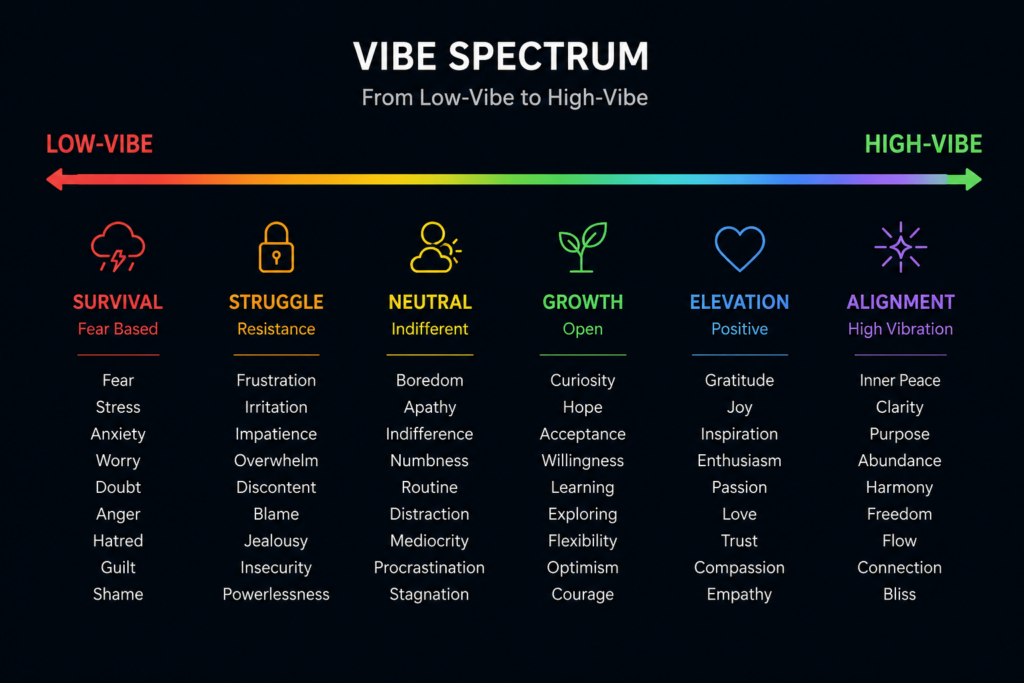
Vibe coding is a software development practice where you describe a feature, task, or full project to a large language model (LLM) in plain language, and the AI writes the code for you, understanding this distinction is what this vibe coding guide is designed to clarify. The term was coined by Andrej Karpathy, co-founder of OpenAI, in February 2025. He described the experience as “fully giving in to the vibes” — focusing on intent and outcomes rather than syntax, and accepting AI-generated code with minimal manual editing.
It is worth being precise here. Vibe coding is not just using an AI as a fancy autocomplete. As programmer Simon Willison has pointed out, if you carefully review, test, and understand every line the AI produces, you are using an LLM as a typing assistant — not vibe coding. True vibe coding implies a degree of trust in the AI’s output, with the human guiding through prompts and feedback rather than line-by-line editing.
In practice, modern vibe coding sits on a spectrum:
- Low-vibe mode: AI drafts code, the developer reviews deeply before merging.
- Medium-vibe mode: AI executes broad multi-file edits, the developer reviews architecture and tests.
- High-vibe mode: The developer accepts most diffs and validates behaviour, not code.
Why Vibe Coding Exploded in 2025 and 2026
The term went viral in early 2025, but the underlying shift was about capability, not branding. Through 2024 and into 2025, AI coding tools moved from inline autocomplete to asynchronous agents that can plan, edit multiple files, run tests, and open pull requests with little hand-holding. GitHub made its asynchronous Copilot agent generally available in September 2025, and competitors quickly followed.
The adoption numbers from the past year tell the story:
- Around 90% of developers regularly use at least one AI coding tool at work as of January 2026, according to JetBrains’ AI Pulse Survey.
- 41% of all global code is now AI-generated.
- In Y Combinator’s Winter 2025 batch, roughly one in four startups had codebases that were 95% AI-generated.
- Vibe coding was named the Collins English Dictionary Word of the Year for 2025.
- The global market for vibe coding platforms reached $4.7 billion in 2025 and is projected to hit $12.3 billion by 2027.
The reason it caught on is simple. Tedious work — authentication boilerplate, CRUD routes, glue code between APIs, dataset utilities — can now be generated in minutes instead of hours. Non-technical founders and designers can ship working prototypes without waiting on engineering capacity. And experienced developers can move at a different pace entirely, with some practitioners reporting six-figure line counts shipped in two weeks.
The Best Vibe Coding Tools in 2026
The vibe coding tool landscape has split into two main categories: AI-powered code editors for developers who want to stay close to the code, and full-stack platforms that handle everything from database to deployment.
AI-Powered Code Editors
- Cursor — One of the most widely adopted AI-first IDEs, with strong multi-file editing and agent workflows.
- Windsurf — Known for rapid prototyping and a smooth agentic experience.
- GitHub Copilot — Now an asynchronous agent integrated with issues, pull requests, and Actions.
- Claude Code — Anthropic’s command-line agent, popular for architectural work, large refactors, and long-running tasks.
- Zed — A native, performance-focused editor with agentic AI features and a leaner footprint.
Full-Stack Vibe Platforms
- Replit Agent — Goes from prompt to deployed app inside the browser.
- Bolt.new — Optimised for full-stack web apps with hosting baked in.
- Lovable — Popular with founders and designers building MVPs without an engineering team.
- Google Antigravity — Famously used by Linus Torvalds to vibe code a Python visualiser tool for his AudioNoise audio effects project in early 2026.
For most teams in 2026, the practical answer is hybrid: a fast prototyping tool like Windsurf or Bolt for early ideation, and an editor-based agent like Claude Code or Copilot when the project moves toward production.
The Real Benefits of Vibe Coding
When teams treat vibe coding as a new interface for engineering — not a replacement for it — the gains are substantial.
Speed of iteration. Projects that used to take weeks now take days. Surveys report 51% faster task completion and 74% of developers feeling more productive when using AI-assisted workflows.
Lower barrier to entry. About 63% of vibe coders are non-developers — designers, product managers, founders, and analysts building tools they would previously have queued behind an engineering team. The barrier has shifted from “Can you code?” to “Can you articulate what you want?”
Better use of senior engineers. Senior developers with ten or more years of experience report the largest productivity gains, in the region of 80%. They use AI to handle routine work and spend their time on architecture, security, and trade-offs the model cannot reason about.Faster product-market fit. Many YC startups now vibe code their way to product-market fit, then bring in engineers to rebuild the critical paths properly. This is a meaningful change in how early-stage companies allocate capital.
The Risks: The “Vibe Coding Hangover” Is Real
The same speed that makes vibe coding attractive creates problems if you treat the output as finished work. Fast Company described the “vibe coding hangover” in late 2025, with senior engineers reporting development hell when scaling AI-generated codebases. The risks are now well documented.
Security gaps. A December 2025 CodeRabbit analysis of 470 open-source pull requests found AI-co-authored code contained roughly 1.7 times more major issues than human-written code, with security vulnerabilities appearing at 2.74 times the rate. Other research puts the share of AI-generated code with a security flaw around 25%. A widely reported breach in early 2026 exposed roughly 1.5 million API keys and 35,000 user emails from a vibe-coded app whose owner admitted to never writing a line of code manually.
The trust paradox. Stack Overflow’s 2025 data shows developer trust in AI code has dropped from around 40% to 29% in a single year. Yet 96% of developers do not fully trust that AI-generated code is functionally correct, and only 48% always review it before shipping. People are using tools they do not trust to ship code they do not read.
Technical debt. GitClear’s longitudinal study reports a roughly 60% drop in refactoring volume since 2021 and a sharp rise in code duplication. AI is generous with new code and reluctant to clean up old code, which adds up fast.
Orphan code. If no one on the team understands what a generated module actually does, every future change becomes expensive. A short-term velocity gain quietly turns into a medium-term drag.QA shortcuts. Around 36% of vibe coders admit to skipping QA entirely and “re-prompting instead of debugging” when something breaks — a habit that holds until it really, really doesn’t.
Vibe Coding Best Practices for 2026
The teams getting the most out of vibe coding share a common posture: This vibe coding guide‘s best practices come from teams who use AI as a force multiplier for engineering discipline, not as a substitute for it.
1. Define intent before you prompt
Write a short brief before opening the agent: what the feature should do, what it should not do, what success looks like, and any non-negotiables (auth, rate limits, audit logs). A clear brief produces a clear PR. A vague prompt produces a vague mess.
2. Wireframe even when you do not have to
A rough sketch in Figma, Whimsical, or Miro — or even a hand-drawn screenshot — gives the AI something concrete to map to. Modern vibe coding tools accept image input, and the difference in output quality is significant.
3. Set up the foundation first
Before generating features, lock in your data model, authentication strategy, environment management, and version control. Use Git checkpoints generously so you can roll back when the AI takes a confident wrong turn.
4. Adopt the spec-to-PR pattern
Write a structured task brief with constraints and acceptance tests, let the agent open a draft PR, and then do targeted human review on interfaces, error handling, and anything security-sensitive. This keeps the speed of vibe coding while preserving accountability.
5. Use self-reflection prompting for security
Do not accept the first draft on anything that matters. Once the AI produces a feature, ask it to take on a different role — “Now act as a security engineer and review this code for path traversal, injection, RCE, and authentication bypasses” — and have it rewrite the hardened version. Two-stage prompting consistently produces fewer issues than a single pass.
6. Defend at the infrastructure layer
Assume the AI will occasionally remove a security check or leak a secret. Gate your app at the entry point with tools like NGINX, Cloudflare Zero Trust, or a managed WAF, so the perimeter holds even when the code does not.
7. Document what the AI built and why
Keep a short log of prompts, decisions, and trade-offs alongside the code. Without it, you lose the chain of reasoning that explains why the module is the way it is — and the next person to touch it (often future you) will pay for it.
8. Know when to stop vibing
Vibe coding is excellent for prototypes, internal tools, glue code, scripts, and integration-heavy work. It is a poor fit for payment processing, encryption, custom auth, or anything where failures are expensive and silent. When you cross that line, drop to low-vibe mode and review every change.
Who Should Use Vibe Coding?
Vibe coding is not one workflow — it is a set of workflows that fit different roles.
- Founders and product managers validating ideas and shipping MVPs without an engineering team.
- Designers turning Figma files into working prototypes for user testing.
- Junior developers learning faster by reading and modifying AI-generated code — provided they actually read it.
- Senior engineers compressing routine work so they can spend time on architecture and harder problems.
- Small business owners and operators building internal tools, automations, and dashboards that would never have justified a developer hire.
The roles that struggle are the ones that try to use vibe coding to skip engineering entirely — shipping production systems without anyone on the team who can read the code when it breaks.
The Future of Vibe Coding
The trajectory is clear, even if the destination is not. IDC predicts that 40% of G2000 job roles will involve working with AI agents by 2026, with a tenfold increase in agent usage and roughly 1,000x growth in inference demand by 2027. Microsoft’s CTO has publicly predicted that 95% of all code will be AI-generated within five years.
At the same time, the backlash is real. Gartner expects over 40% of agentic AI projects to be cancelled by the end of 2027 due to unclear ROI and high costs. A January 2026 academic paper titled Vibe Coding Kills Open Source argued that LLMs reduce engagement with open-source maintainers and homogenise development around popular libraries, with hidden costs for the ecosystem.
The likely outcome is not “AI replaces developers” or “AI was overhyped.” It is a hybrid model where engineers spend less time typing syntax and more time defining intent, reviewing architecture, and owning the parts of the system that actually matter. The product engineer — someone who understands business impact, system design, and how to direct AI agents — is the role that is quietly being created right now.
Vibe Coding Guide: FAQs
Is vibe coding the same as using GitHub Copilot?
Not quite. Copilot can be used as a typing assistant, where you review every suggestion, or as an agent that handles broad changes with minimal review. Only the second mode really counts as vibe coding.
Do I need to know how to code to vibe code?
You can ship simple apps without coding knowledge, and around 63% of vibe coders are non-developers. But the moment something breaks or needs to scale, basic programming literacy becomes important. Treat it as a useful skill to build alongside, not skip.
Is vibe-coded software safe to put in production?
It can be, but not by default. AI-generated code shows roughly 1.7x more major issues and 2.74x more security vulnerabilities than human-written code. Production use requires human review on security-sensitive paths, infrastructure-level defences, and proper testing.
Which vibe coding tool should I start with?
For non-developers and founders, try Lovable, Bolt.new, or Replit Agent. For developers, Cursor, Windsurf, Claude Code, or GitHub Copilot are the most common starting points in 2026.
Will vibe coding replace software engineers?
It is changing what engineers do, not eliminating the role. The work is shifting from writing syntax to defining intent, reviewing architecture, and owning the systems that matter most. Engineers who learn to direct AI agents effectively are seeing the largest productivity gains.
Final Thoughts
Vibe coding is the most important shift in software development since the move to the cloud, use this vibe coding guide as your starting point — the vibe is real, but so is the responsibility. It is faster, cheaper, and more accessible than anything that came before — and it is also genuinely risky in ways the industry is still learning to handle. The teams who win with it are the ones who treat it as a new interface for engineering, not as permission to skip engineering altogether.
If you are building with AI in 2026, set your intent clearly, defend your perimeter, review the parts that matter, and keep a human in the loop on anything you would not be comfortable explaining at 3 a.m. when production is down. The vibe is real — but so is the responsibility.