 Aretha Rgeel Castigon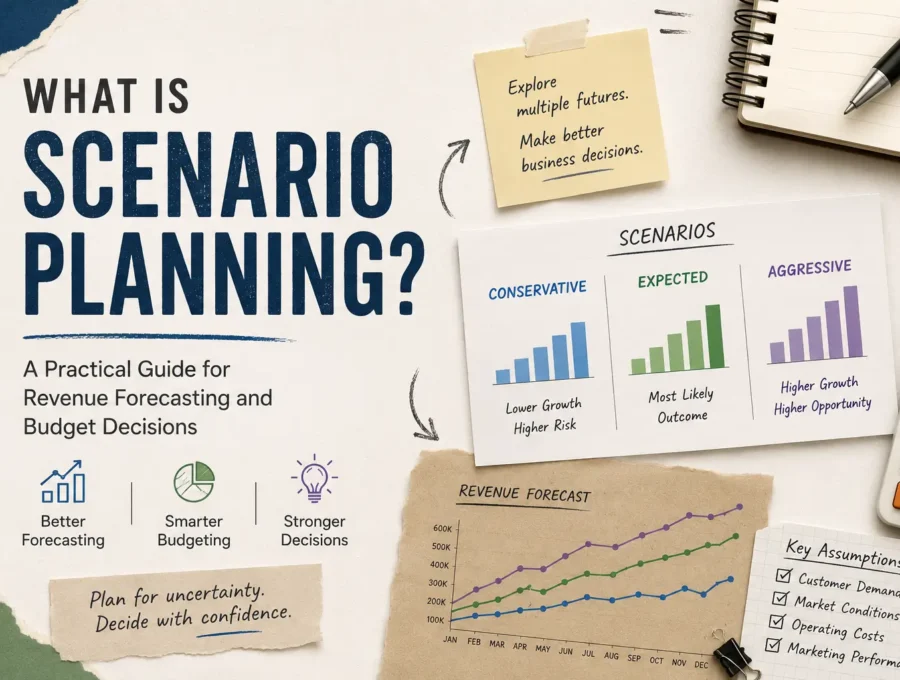
Introduction
Every business faces uncertainty when making decisions about revenue forecasting, budget planning, and growth. Changes in customer demand, market conditions, and operating costs can make future outcomes difficult to predict. Instead of relying on a single forecast, scenario planning helps businesses evaluate different possibilities, manage risks, and make more informed strategic decisions. In this guide, you’ll learn what scenario planning is, how it differs from traditional forecasting, and how it supports better budgeting and decision-making.
What is Scenario Planning?
Scenario planning is a strategic planning approach that helps businesses evaluate different possible future outcomes instead of relying on a single prediction. Rather than asking “What will happen?”, it asks “What could happen?”
Most businesses create three scenarios:
- Conservative – Unfavorable but realistic conditions.
- Expected – The most likely outcome based on current assumptions.
- Aggressive – Favorable conditions with stronger business performance.
By comparing these scenarios, businesses can improve revenue forecasting, support budget planning, and make better decision making under uncertain market conditions.
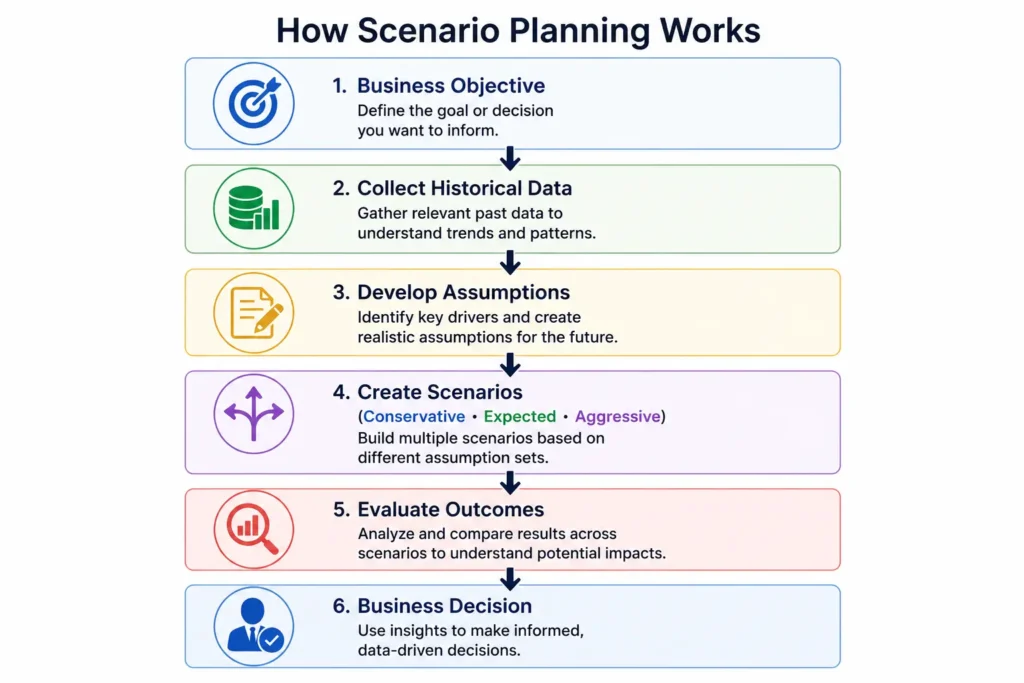
Fig 2. This image is made with Cava
Forecasting vs Scenario Planning
Although forecasting and scenario planning are closely related, they serve different purposes. Forecasting uses historical data, trends, and current performance to estimate the most likely future outcome, which makes it ideal for short-term planning such as sales targets, revenue projections, and budget preparation.
Scenario planning takes a broader approach. Instead of predicting one future, it explores multiple plausible outcomes based on different assumptions and uncertainties. Rather than asking, “What is most likely to happen?“, it asks, “What could happen if business conditions change?“ This helps organizations prepare for both risks and opportunities, especially in uncertain or rapidly changing markets.
Rather than replacing forecasting, scenario planning builds on it. Businesses often use a forecast as the baseline, then create conservative, expected, and aggressive scenarios to evaluate how changes in revenue, costs, customer demand, or marketing performance could affect business outcomes. This allows decision-makers to develop more resilient strategies and make informed budgeting and investment decisions.
| Forecasting | Scenario Planning |
| Predicts the most likely future outcome | Explores multiple possible future outcomes |
| Based on historical data and trends | Based on assumptions, uncertainties, and different business conditions |
| Best suited for short-term planning | Supports both short- and long-term strategic planning |
| Produces a single expected forecast | Develops multiple scenarios (e.g., conservative, expected, aggressive) |
| Focuses on prediction | Focuses on preparation and decision-making under uncertainty |
The Three Types of Business Scenarios
A typical scenario planning model uses three scenarios: Conservative, Expected, and Aggressive. Each is based on different assumptions to represent a range of realistic business conditions, which helps organizations evaluate potential outcomes before making important decisions.
1. Conservative Scenario
The Conservative scenario assumes business performance is below expectations due to factors such as lower customer demand, weaker marketing results, or higher operating costs. It helps businesses prepare for potential risks and develop contingency plans.
2. Expected Scenario
The Expected scenario (also called the base case) reflects the most likely outcome based on historical data, current trends, and realistic assumptions. It serves as the baseline for revenue forecasting, budget planning, and day-to-day operations.
3. Aggressive Scenario
The Aggressive scenario assumes favorable business conditions, such as stronger demand, higher revenue, or improved profitability. While optimistic, its assumptions should remain realistic and supported by available data.
Using all three scenarios gives businesses a clearer view of possible outcomes, allowing them to make more flexible and informed strategic decisions instead of relying on a single forecast.
Using Scenario Planning for Budget and Marketing Decisions
Scenario planning is especially valuable when making important business decisions, such as setting marketing budgets, forecasting revenue, or evaluating future investments. Instead of relying on a single forecast, businesses can compare multiple scenarios to understand how different assumptions may affect financial performance.
For example, a company planning its advertising budget can evaluate how changes in revenue growth, marketing performance, or operating costs influence profitability. By comparing Conservative, Expected, and Aggressive scenarios, decision-makers can better assess potential risks and opportunities before allocating resources.
To demonstrate this process, the example below uses a fictional business dataset using Python in Google Colab. The values are for illustrative purposes only and show how scenario planning can be used to compare projected revenue and profit contribution under different business conditions.

Fig 3. Google Colab Output: Example Scenario Planning Dataset
After preparing the dataset, summarize the projected results for each scenario. This provides a clear comparison of business performance under different assumptions and helps decision-makers quickly evaluate potential outcomes.
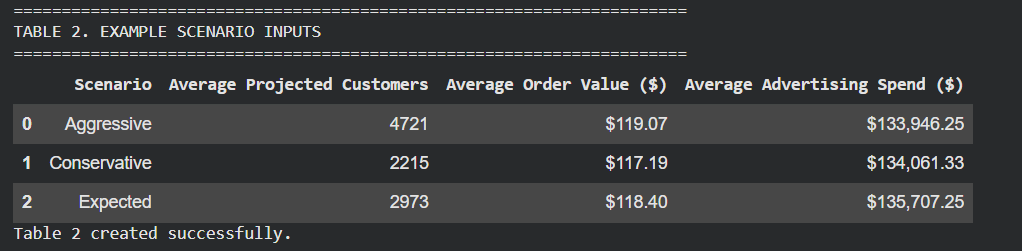
Fig 4. Google Colab Output: Example Scenario Planning Summary
Visualizing the results makes it easier to compare the scenarios. The chart below illustrates the projected revenue for each scenario, highlighting how revenue changes under conservative, expected, and aggressive business conditions.
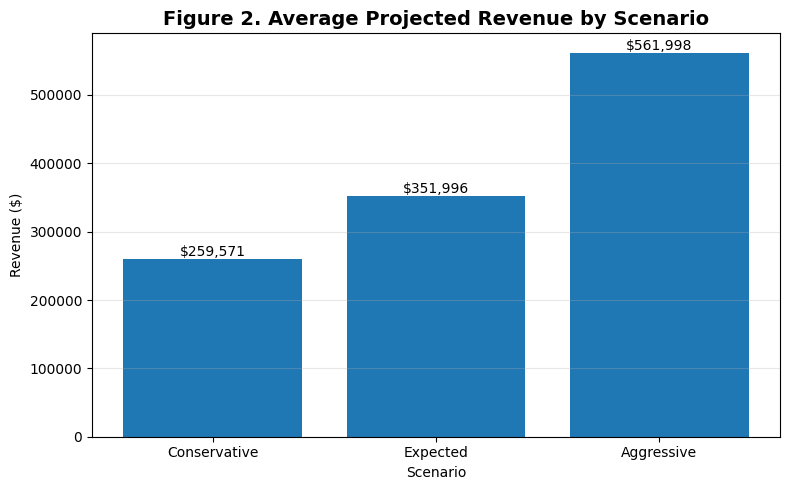
Fig 5. Google Colab Output: Average Projected Revenue by Scenario Plot
Revenue alone does not tell the full story. Comparing profit contribution across scenarios provides deeper insight into whether projected revenue is sufficient to justify spending and achieve business goals. This helps organizations make more informed budgeting and investment decisions.
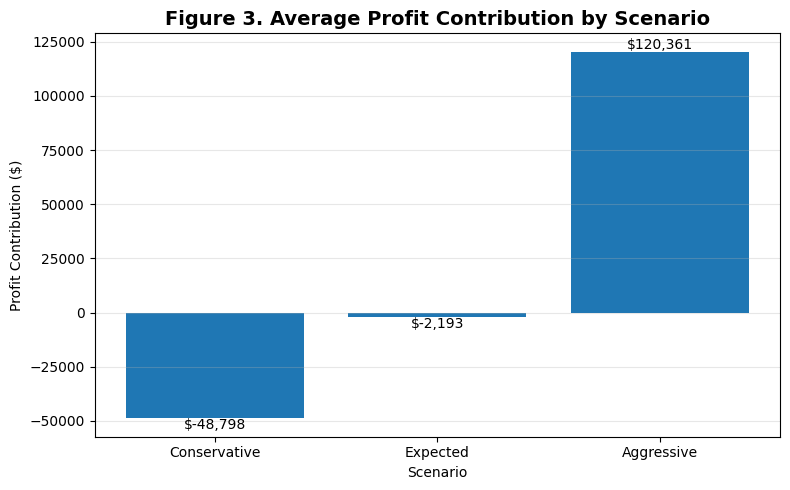
Fig 6. Google Colab Output: Average Profit Contribution by Scenario Plot
By evaluating multiple scenarios before making decisions, businesses can better manage uncertainty, allocate resources more effectively, and develop strategies that remain flexible as market conditions change.
Best Practices for Building Reliable Scenarios
The effectiveness of scenario planning depends on the quality of the assumptions and data behind it. To build reliable and actionable scenarios, consider the following best practices:
- Use reliable historical data. Build scenarios using accurate historical data to identify trends and create realistic assumptions.
- Focus on key business drivers. Prioritize variables that have the greatest impact on performance, such as revenue, marketing efficiency, operating costs, and profit margins.
- Keep assumptions realistic. Conservative, expected, and aggressive scenarios should represent plausible business conditions rather than overly optimistic or pessimistic outcomes.
- Review and update scenarios regularly. Revisit assumptions as new data becomes available or market conditions change to keep forecasts relevant.
- Use scenario planning to support decision-making. Scenario planning is a decision-support tool that complements forecasting and business expertise, helping organizations evaluate risks and opportunities before taking action.
Common Mistakes to Avoid
Scenario planning is most effective when it is built on realistic assumptions and updated regularly. Avoid these common mistakes to make your scenarios more reliable and useful for decision-making:
- Relying on a single forecast. Planning for only one expected outcome can leave your business unprepared when market conditions change.
- Using unrealistic assumptions. Base each scenario on historical data, current trends, and reasonable business expectations rather than overly optimistic or pessimistic estimates.
- Overlooking key business drivers. Factors such as revenue, marketing performance, operating costs, and profit margins have a significant impact on business outcomes and should be considered when building scenarios.
- Failing to update scenarios. Regularly review and revise assumptions as new data becomes available or business conditions evolve.
- Treating scenarios as predictions. Scenario planning is not about predicting the future, it is about preparing for a range of possible outcomes so businesses can respond with greater confidence and flexibility.
Conclusion
Scenario planning is more than a forecasting technique. It is a practical approach that helps businesses prepare for uncertainty by evaluating multiple possible outcomes. By combining historical data with realistic assumptions, organizations can better manage risks, allocate resources effectively, and make informed decisions with greater confidence.
At Data2Stats Consultancy Inc., we empower organizations with data driven solutions that simplify forecasting, strengthen strategic planning, and support smarter decision making. Whether you are planning your next marketing budget, forecasting future revenue, or evaluating strategic investments, scenario planning provides a stronger foundation for confident, data driven decisions.