Introduction
Communities, like people, have pulses—sometimes steady, sometimes irregular, but always revealing of their condition. Just as a doctor listens closely through a stethoscope, the Community-Based Monitoring System (CBMS) listens to the heartbeats of barangays, tracing rhythms of progress and murmurs of neglect.
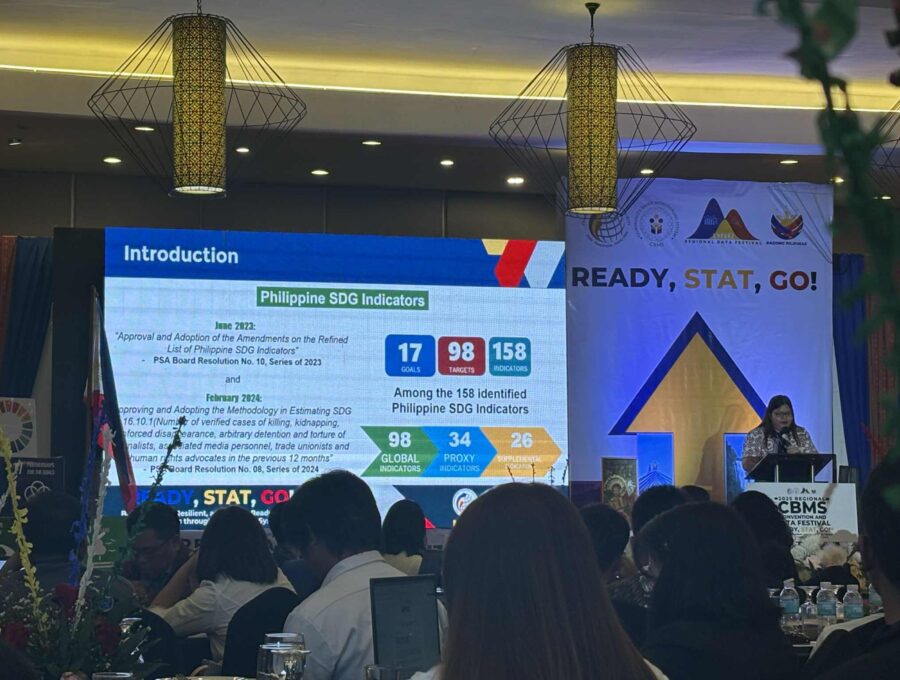
This year’s Regional CBMS Convention and Data Festival for Northern Mindanao served as a shared moment of listening on how CBMS for local development is empowering communities. Organized by the Philippine Statistics Authority, it brought together LGUs, civil society, academe, and private sector partners to explore how data can diagnose community conditions and guide development interventions. More than a showcase of numbers, the festival reminded participants that statistics, when properly harnessed, are vital signs for building agile, resilient, and future-ready Filipino communities.
A Stethoscope for Communities: The Role of CBMS in Local Development
The convention framed CBMS as a stethoscope that listens to the health of local communities. Janith C. Aves, Regional Director of PSA-10, anchored her talk on its legislative backbone—RA 10625 and RA 11315. She emphasized that PSA is not just a national statistics agency but a partner in local development, bridging the gap between data and governance.
CBMS, being rooted in the pulse of each barangay, captures nuances that national surveys often miss.
“Data alone cannot drive change; rather, it is how data empowers responsive local planning and participatory governance that matters,” said Maria Evangeline Non, Chief Statistician of PSA Bukidnon, reinforcing the idea that by involving communities in data collection, CBMS becomes an act of empowerment.
From poverty indices to education mapping, CBMS captures nuances that national surveys often miss. Each dataset becomes a vital sign—an indicator of where a community thrives or where attention is needed. These insights, once analyzed, enable LGUs to craft people-centered programs grounded in evidence.
From Numbers to Action: Turning Data into Local Impact
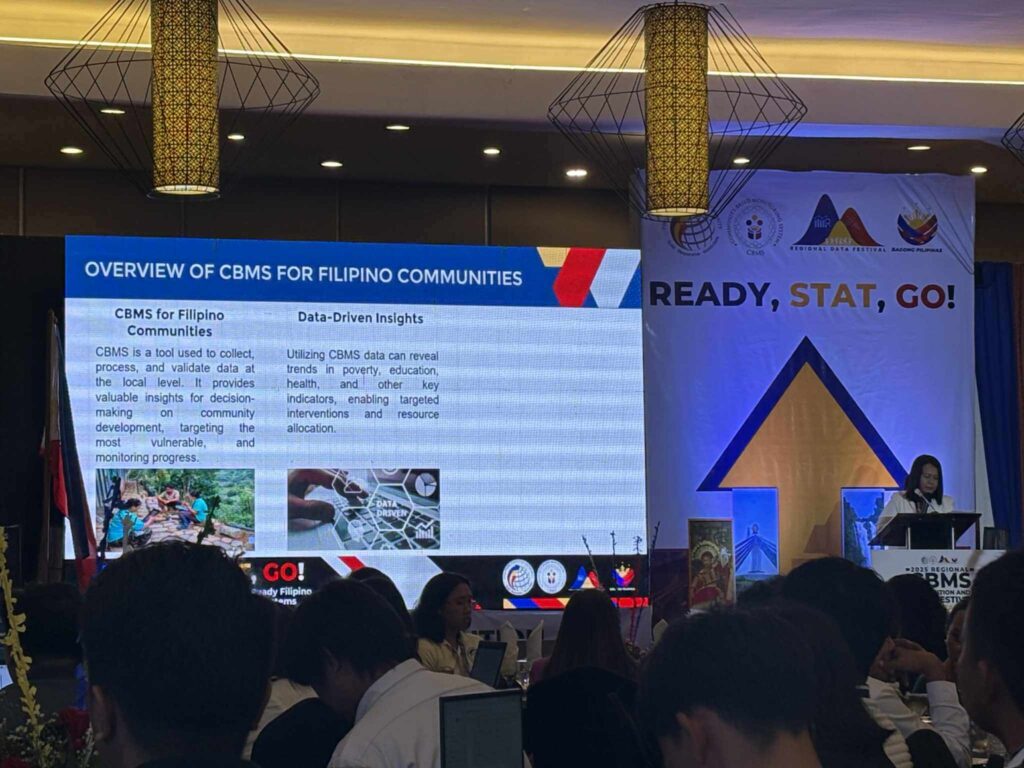
Behind the success of CBMS for local development lies a meticulous data pipeline. After PSA consolidates the raw data, it presents preliminary findings to LGUs and stakeholders. Once LGUs complete their validation requirements, they receive the full dataset in CSPRO files, CSVs, and GIS maps. This process ensures accuracy before local implementation.
However, Hazel Occeña of DILG X highlighted a persistent challenge.
“Many LGUs have the data but not the tools to interpret it,” Occeña shared. For some, CBMS outputs end up as static reports. Others, however, go a step further—using CBMS as a decision-support system for designing targeted interventions in health, education, and poverty reduction.
To address these gaps, Abdulbasit Abdulmasad of PSA’s Community-Based Statistics Division introduced the CBMS Portal, set to launch on September 30. The portal will offer interactive dashboards and GIS-linked presentations that help LGUs make data-driven decisions efficiently. This aligns with what we at Data2Stats Consultancy envision—helping local governments translate raw data into actionable insights through modern analytics tools.
Bridging Gaps Through CBMS Innovation
In her report on the Regional Pace of Progress for the Sustainable Development Goals (SDGs), Brenda Lynn Castro presented a mixed picture of development in Region 10.
“While there were advances in Goal 7 on Affordable and Clean Energy and Goal 16 on Peace, Justice, and Strong Institutions, regressions were noted in Goal 6 on Clean Water, Goal 9 on Industry and Infrastructure, Goal 11 on Sustainable Cities, and Goal 13 on Climate Action,” she said. The heartbeat, in other words, had irregular rhythms.
“Without CBMS, SDG monitoring risks being too broad, masking inequalities. With CBMS, we can tailor interventions directly to those who need them most,” she added. Her message captured the essence of why CBMS for local development is critical—it makes visible the people and places often hidden in national averages.
Dave Dianne Ludoc-Dela Cruz of PSRTI emphasized that CBMS indicators are already embedded in local planning instruments and that LGUs are mandated to conduct CBMS every three years. “However, many LGUs cannot maximize this without tools,” she noted. The upcoming CBMS Portal, along with third-party analytics collaborations, can bridge this divide—transforming the heartbeat into a rhythm that’s both audible and actionable.
Stories of Hope and Collaboration
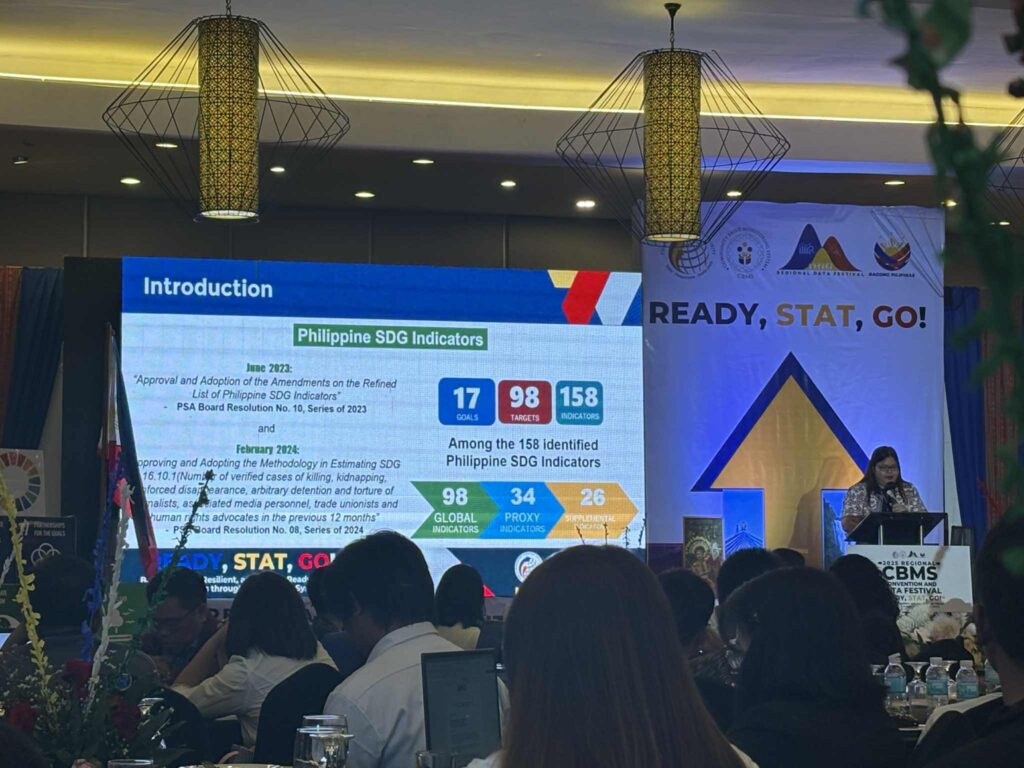
As the region strives toward the “Life Filipinos Want by 2040”—Matatag, Maginhawa, Panatag—Richardson Cua of NEDA X reminded attendees that “catch-up plans are being designed to bridge regional gaps, and CBMS can help us track progress.”
Sarah Balagbis emphasized that agile governance depends on “credible, coordinated, and quality-assured statistics.” Meanwhile, Lemuel Garcia of PSA added, “Data are raw facts, information is processed knowledge, and governance is applying that knowledge effectively.”
Despite challenges in technical capacity and resource gaps, the overarching tone of the convention was one of hope. With the CBMS Portal soon to launch and collaborations strengthening between PSA, DILG, NEDA, and private partners like Data2Stats Consultancy, the message was clear: the data revolution must include everyone.
“CBMS is part of a larger heartbeat—the rhythm of sustainable development,” Abdulmasad reminded everyone, encapsulating the spirit of the event.
Conclusion
Through CBMS for local development, the pulse of Filipino communities becomes clearer. When data, governance, and partnerships converge, LGUs can design programs that listen to their people and act on their needs. The 2025 CBMS Convention reminded us that development isn’t just about numbers—it’s about translating those numbers into life, resilience, and hope.